Scrum Framework — Roles, Events, and Artifacts for the Busy Engineer
My last post explained why Waterfall failed and why Agile won. This post covers Scrum — the most widely used Agile framework — as a single, connected system.
If you’re an engineer reading this: Scrum is not “standup meetings and sprints.” It’s a feedback loop wrapped in a container, with clear accountability boundaries and explicit quality gates. Every element exists because real teams needed it.
What Scrum Is
From the 2020 Scrum Guide:
Scrum is a lightweight framework that helps people, teams and organizations generate value through adaptive solutions for complex problems.
Scrum is: - Lightweight — minimal rules (roles, events, artifacts, and their binding rules) - Simple to understand but difficult to master - A framework, not a methodology — it doesn’t tell you how to test, deploy, or write code
It’s built on empirical process control: knowledge comes from experience, decisions are based on what is known.
The Three Pillars
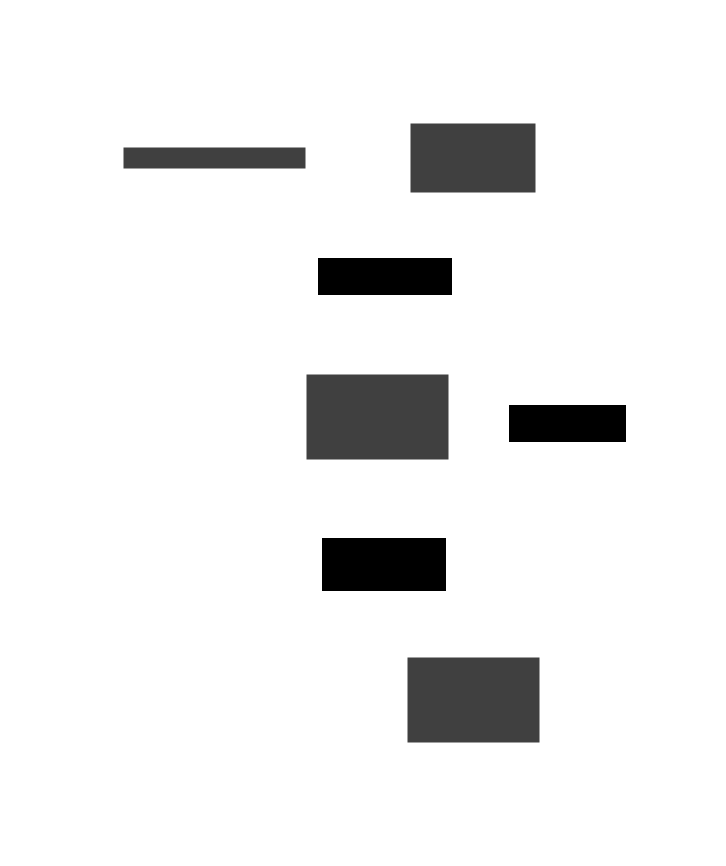
Every Scrum event exists to enable one of these three pillars. The Daily Scrum inspects progress toward the Sprint Goal. The Sprint Review inspects the Increment. The Retrospective inspects the process itself. None of this works without Transparency — if your Product Backlog is hidden, your Sprint Backlog is unreadable, or your Definition of Done is vague, inspection is meaningless.
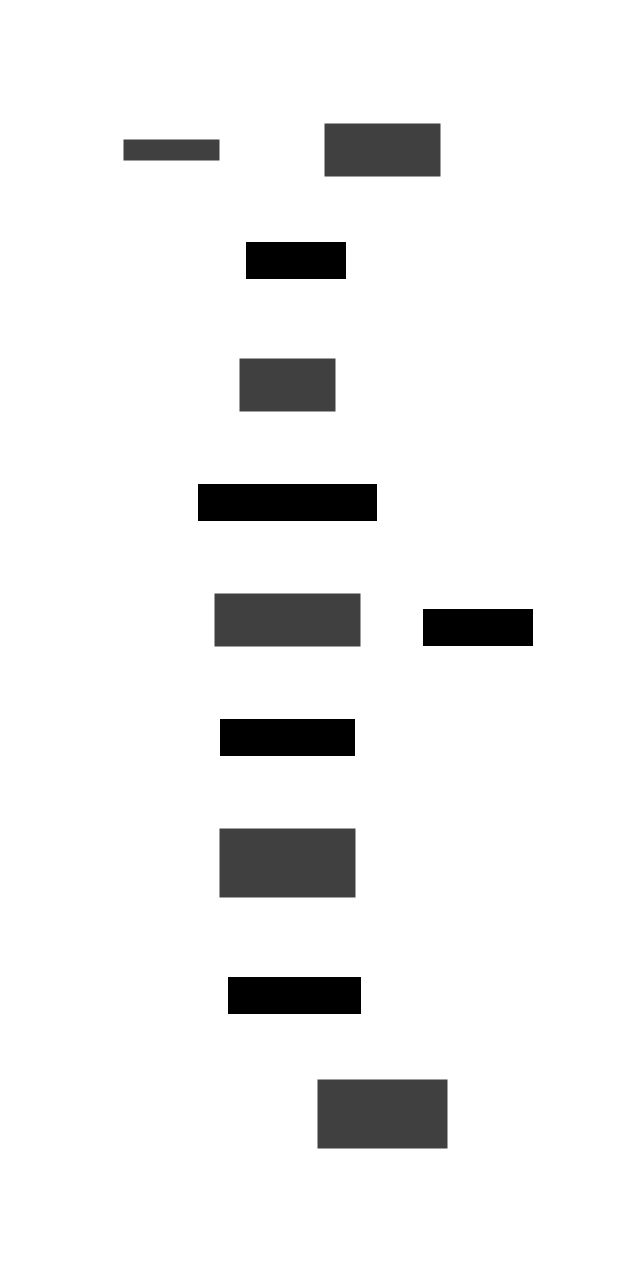
The Five Values
Values give the pillars their foundation. When the team embodies these, empiricism works:
The Three Accountabilities (Roles)
Scrum defines three accountabilities, not job titles:

Key insight for engineers: there is no “project manager” in Scrum. The Product Owner decides what to build. The Developers decide how to build it. The Scrum Master ensures the process works.
The Five Events
Events are time-boxed (shorter for shorter Sprints) and create regularity — minimizing the need for meetings not defined in Scrum:
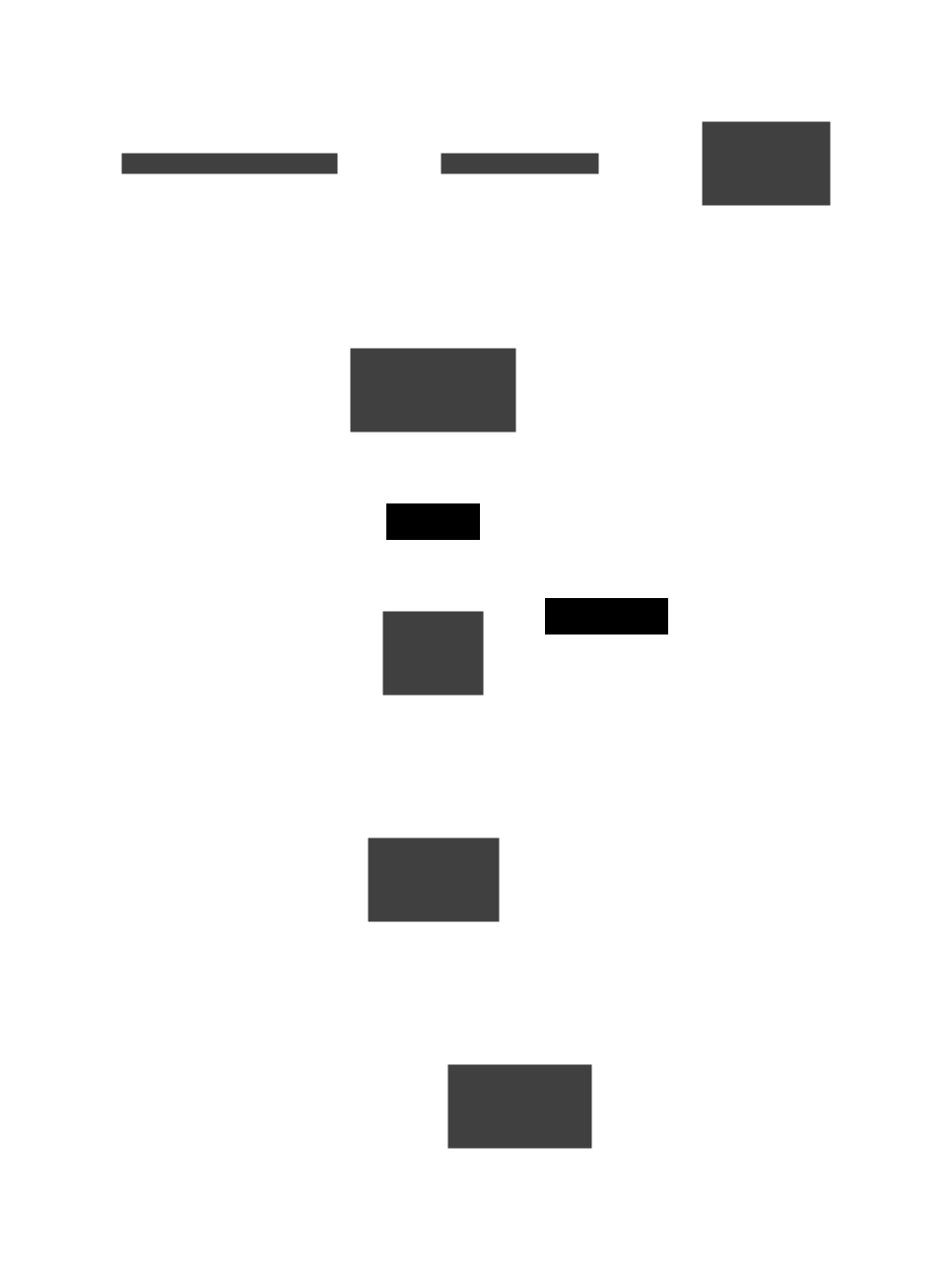
Sprint (the container): - Fixed length ≤ 1 month - A new Sprint starts immediately after the previous one ends - Only the Product Owner can cancel a Sprint (and only if the Sprint Goal becomes obsolete)
Sprint Planning (the plan): - Entire Scrum Team attends - Answers: Why is this Sprint valuable? (Sprint Goal), What can be Done? (selected PBIs), How will the work be done? (Sprint Backlog plan)
Daily Scrum (the sync): - 15 minutes, same time/place daily - Developers inspect progress toward Sprint Goal - Adapt Sprint Backlog as needed - The Scrum Master enforces it happens, but Developers own it
Sprint Review (the demo): - Scrum Team + stakeholders - Inspect the Increment; not a presentation but a working session - Discuss what was done, what changed, what to do next - Product Backlog may be adjusted
Sprint Retrospective (the improvement): - Team inspects itself (individuals, interactions, processes, tools, Definition of Done) - What went well? What problems? How were they solved? - Identify the most impactful changes for next Sprint
The Three Artifacts and Their Commitments
Artifacts represent work or value and have explicit commitments that make them transparent:

Product Backlog (managed by the Product Owner): - Emergent, ordered list of everything needed - Items that can be Done in one Sprint are “ready” - Never complete — the Product Backlog lives as long as the product does - Commitment: Product Goal — the long-term target that the backlog serves
Sprint Backlog (owned by the Developers): - Sprint Goal + selected items + the plan to deliver them - Highly visible, updated throughout the Sprint - Commitment: Sprint Goal — the single reason this Sprint exists - If the work turns out different than planned, the team negotiates scope, not quality
Increment (accountability of the whole Scrum Team): - Sum of all completed Product Backlog items, integrated with prior work - Must be usable (verifiable, valuable) - Commitment: Definition of Done — a formal quality checklist - If an item doesn’t meet DoD, it goes back to the Product Backlog; it is NOT demoed or released
How the System Connects
Here’s the full framework as a single diagram:
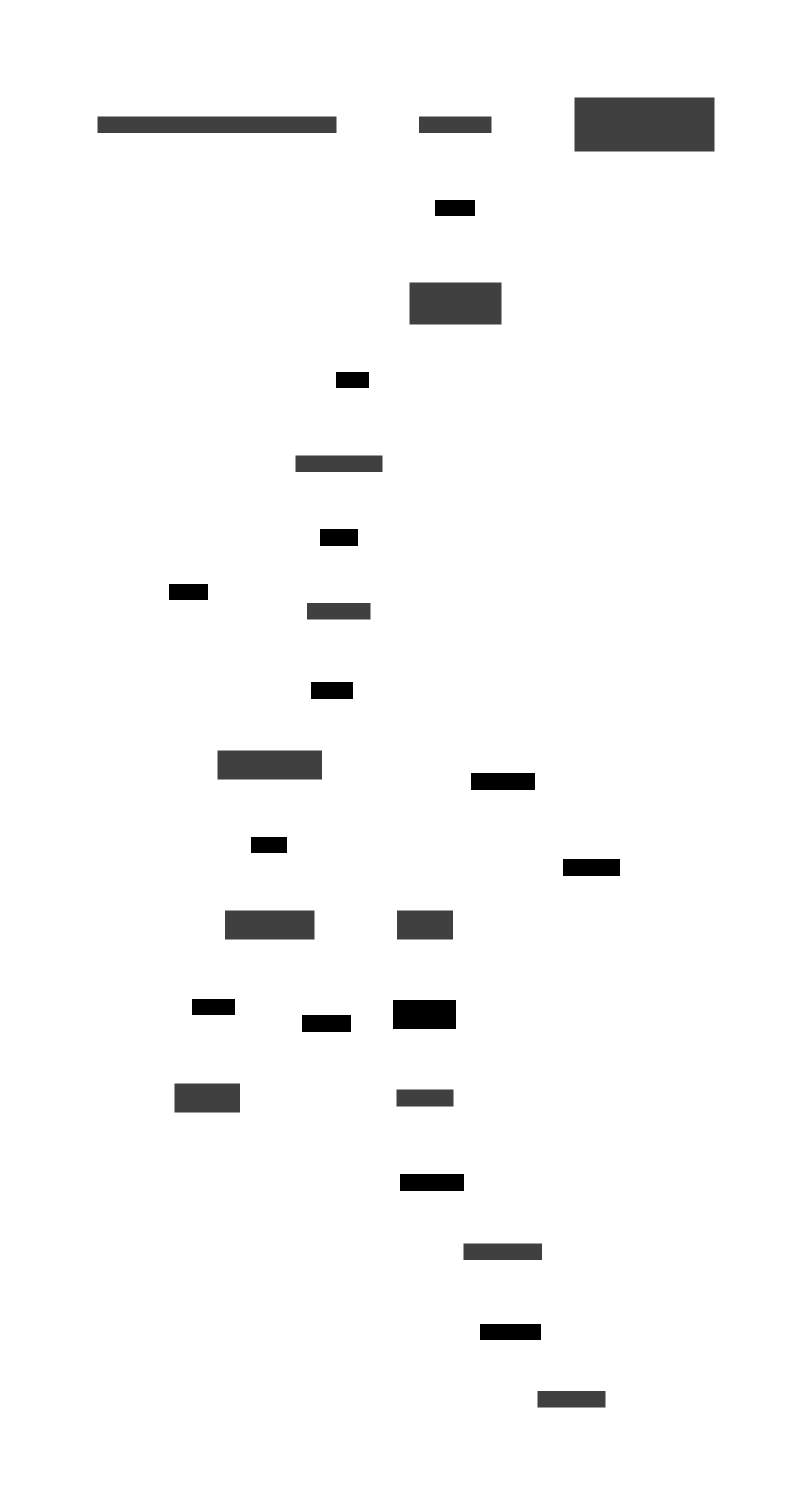
The entire framework is a closed feedback loop: 1. Product Goal defines direction → Product Backlog captures what’s needed 2. Sprint Planning selects work → Sprint Goal gives purpose → Sprint Backlog has the plan 3. Sprint executes → Daily Scrum keeps it on track → Increment is produced (must meet Definition of Done) 4. Sprint Review inspects the result → Product Backlog adjusts based on learning 5. Sprint Retrospective inspects the process → next Sprint Planning starts the cycle again
Summary
| Element | What It Does | Timebox / Size |
|---|
Developers | Decides how to build | 7±2 people, cross-functional |
Scrum Master | Ensures Scrum works | One person |
Sprint | Container for work | ≤1 month |
Sprint Planning | Selects work, defines goal | ≤8 hrs (1-month sprint) |
Daily Scrum | Daily sync, adapt plan | 15 min |
****Sprint Review****
| Element | What It Does | Timebox / Size |
|---|
Sprint Retrospective | Team improvement | ≤3 hrs (1-month sprint) |
Product Backlog | Ordered work list | Living document |
Sprint Backlog | Current sprint plan | Updated daily |
Increment | Working, usable output | Every sprint |
Definition of Done | Quality checklist | Team-defined |
Three pillars (Transparency, Inspection, Adaptation) + five values (Commitment, Focus, Openness, Respect, Courage) = the foundation that makes the framework work.
Next: we map this framework directly onto improving this blog in production — the blog’s Product Backlog, Sprint Planning, and first Sprint.