Google vs SpaceX: Infrastructure Economics Compared — A Platform Security Lens
The answer was a sharp no — and the ensuing comparison between Google’s earthbound hyperscale empire and SpaceX’s orbital mesh network revealed something more useful than a fact-check: a mental model for evaluating infrastructure value that maps directly to the work I do in DevSecOps and Platform Security.
The 25% Myth: What the Numbers Actually Say
| Metric | Context | |
|---|---|---|
| Physical facilities | ~130 campuses | 11,400+ global data centers → ~1.1% |
| Hyperscale capacity share | ~14% of cloud market | AWS 28%, Azure 21%, GCP 14% |
| Big Three combined | 59% of hyperscale capacity | Google is the smallest of the three |
The “25%” figure conflates Google alone with the Big Three combined. For anyone making infrastructure decisions — whether placing workloads, negotiating contracts, or designing threat models — this distinction matters.
Core Architecture Comparison
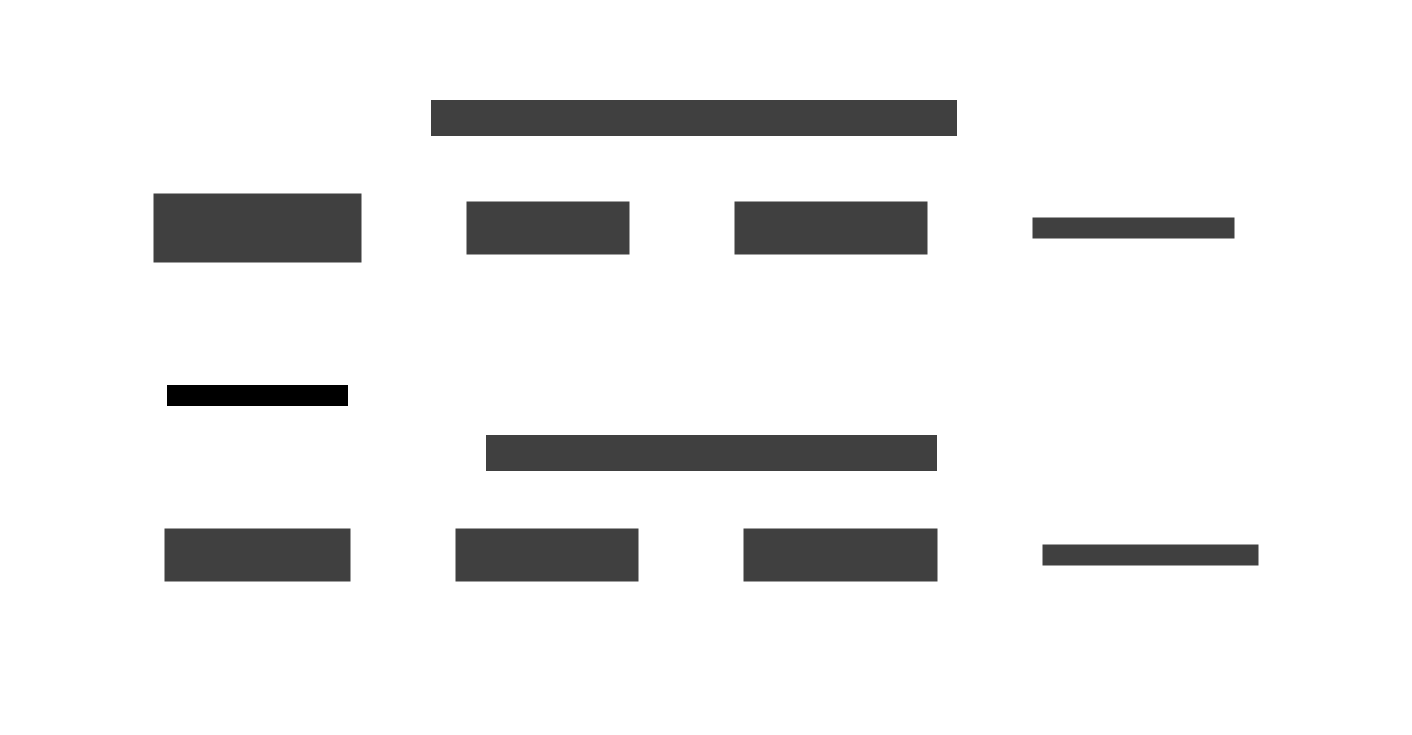
Infrastructure Economics: Value Over Volume
The comparison table from the conversation, reframed for infrastructure decision-makers:
| Dimension | Google (Centralized Hyperscale) | SpaceX (Distributed LEO Mesh) |
|---|---|---|
| Primary Function | Compute + Storage + AI Processing | Packet Transport + Edge Routing |
| Compute Density | Extreme (TPU/GPU pods, MW/rack) | Minimal (satellite flight computers, edge routers) |
| Power Draw | 5–10 GW+ (dedicated substations) | ~100–200 MW (solar arrays + gateways) |
| Dimension | Google (Centralized Hyperscale) | SpaceX (Distributed LEO Mesh) |
|---|---|---|
| ———– | ———————————- | ——————————– |
| Dimension | Google (Centralized Hyperscale) | SpaceX (Distributed LEO Mesh) |
| ———– | ———————————- | ——————————– |
| ———– | ———————————- | ——————————– |
| Dimension | Google (Centralized Hyperscale) | SpaceX (Distributed LEO Mesh) |
| Dimension | Google (Centralized Hyperscale) | SpaceX (Distributed LEO Mesh) |
|---|---|---|
| ———– | ———————————- | ——————————– |
| ———– | ———————————- | ——————————– |
| Capital Intensity | $100B+ (real estate, cooling, fiber, silicon) | $15–30B+ (launch cadence, satellite manufacturing) |
| Revenue Model | Cloud services, Ads, AI | Connectivity subs (B2C/B2B/Gov) |
| Strategic Moat | Vertical integration (chips→fiber→software), data gravity | Orbital shell (spectrum rights, launch cadence, physics) |
| Key Dependency | SpaceX is a tenant — Starlink gateways sit inside Google DCs | Google is the backhaul — orbital mesh needs terrestrial fiber |
The Partnership Nobody Talks About
This is the critical insight for Platform Security and DevSecOps:
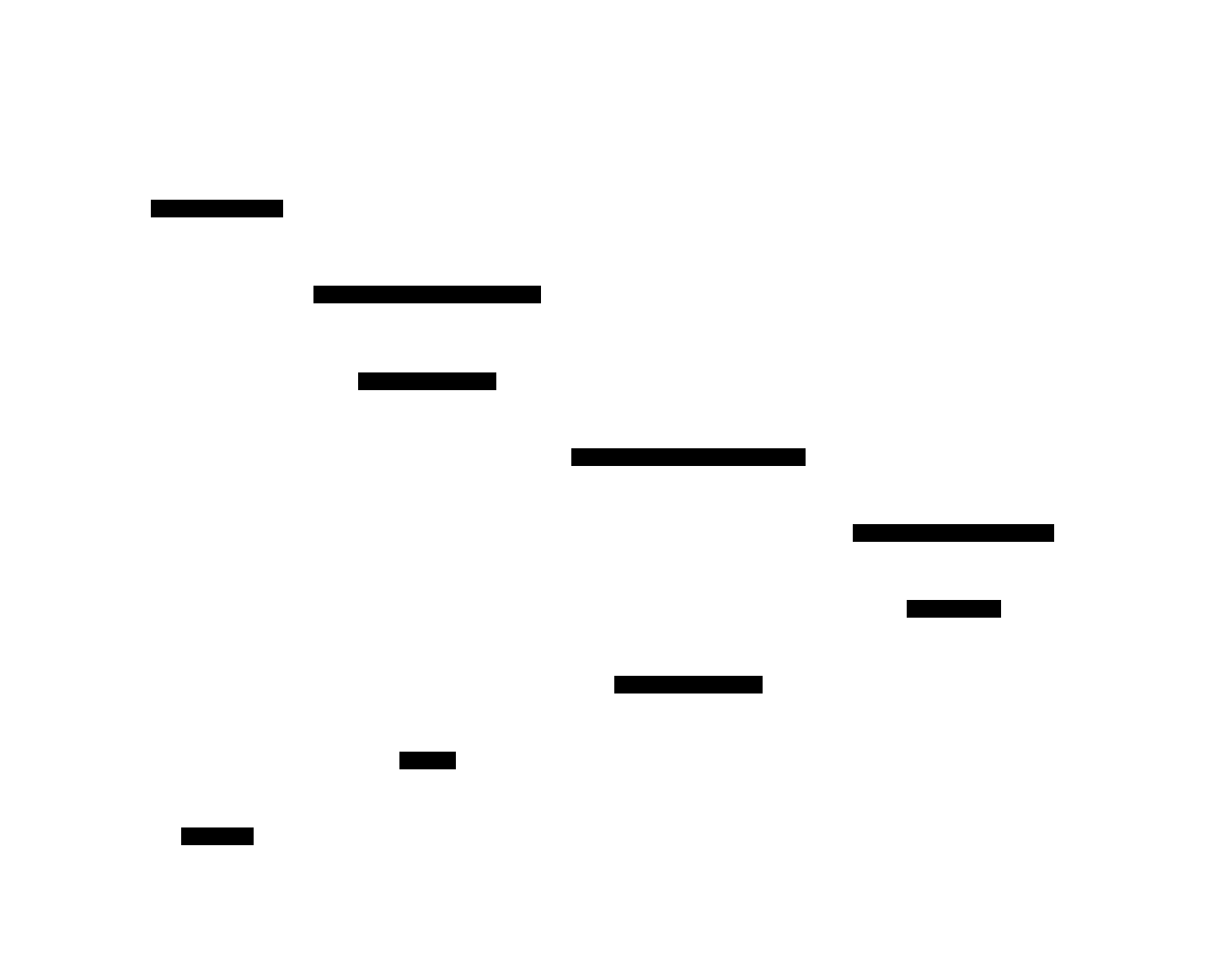
SpaceX doesn’t compete with Google’s data centers — it depends on them. Every Starlink gateway needs: - Reliable power (Google’s substations) - Diverse fiber paths (Google’s private backbone) - Physical security (Google’s high-security equivalent facilities)
For a Platform Security Engineer, this is a supply-chain dependency worth modeling. If you’re designing multi-cloud or hybrid architectures, the “last mile” from orbit terminates in someone else’s hyperscale facility.
What This Means for DevSecOps / Platform Security
1. Capacity Planning ≠ Facility Count
Don’t evaluate cloud providers by data center count. Evaluate by: - Hyperscale capacity (MW, rack density, GPU/TPU availability) - Network fabric ownership (private fiber vs. leased circuits) - Failure domain isolation (blast radius per campus)
2. Edge Is Not Compute
Starlink proves you can build a global routing layer with near-zero compute at the edge. For security architectures: - Edge = policy enforcement point (TLS termination, WAF, DDoS scrubbing) - Core = compute/storage/state (where your Tenable scans, CyberArk vaults, Purview DLP actually run) - Don’t conflate the two in your threat model
3. Vendor Concentration Risk Is Real
If your “multi-cloud” strategy routes through Google DCs for backhaul (even via Starlink), you have a single point of physical control. Map your actual fiber paths, not just your cloud console regions.
4. Infrastructure Value = Leverage
Google’s $100B+ sunk cost in custom silicon, cooling, and fiber creates: - Pricing power (they set the floor) - Innovation velocity (TPU generations, Jupiter fabric) - Compliance inheritance (ISO 27001, SOC 2, FedRAMP — you inherit the stack)
SpaceX’s $15–30B creates different leverage: physics (latency floor) and regulatory (spectrum rights). Different moats, different negotiation positions.
The Analytical Frame I Use
When evaluating any infrastructure decision — cloud vendor, CDN, edge platform, VPN backbone — I run this checklist:
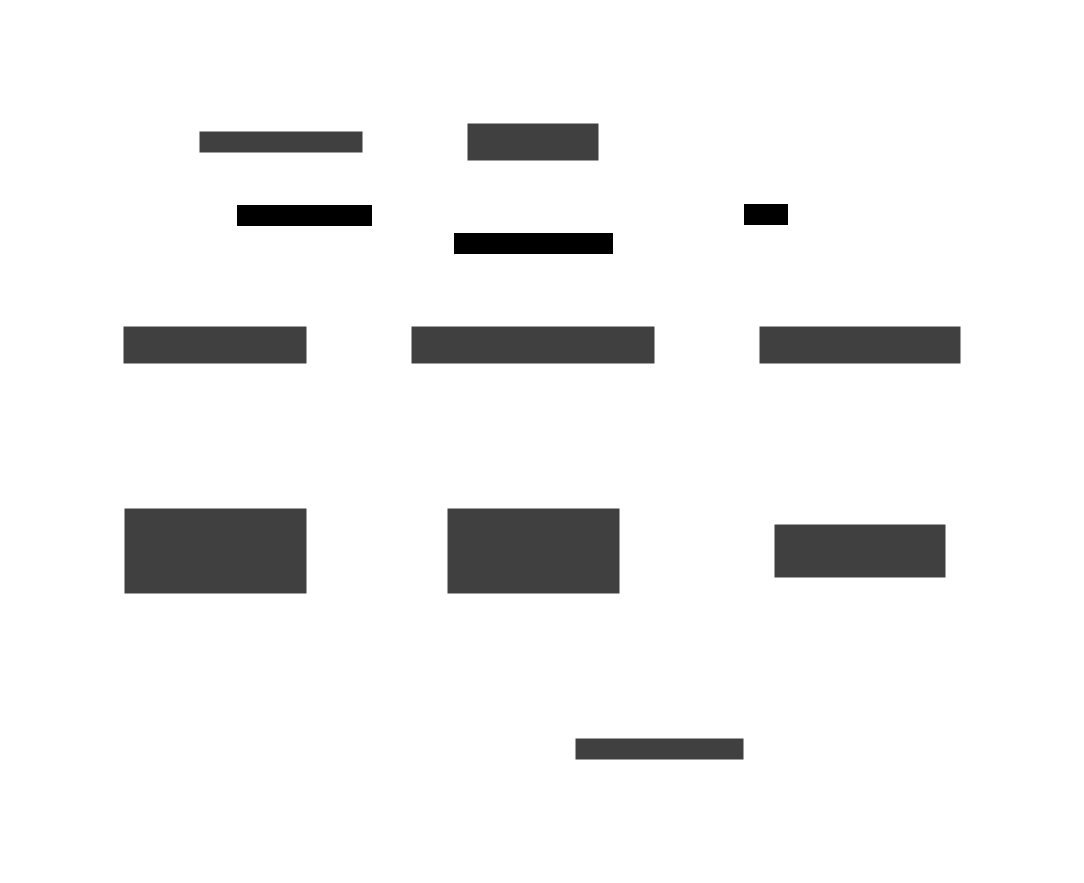
Closing Note: Why I Published This
I didn’t write this to dunk on a hallucinated statistic. I wrote it because infrastructure economics drive security architecture — and the mental models we use to evaluate them are often inherited, unexamined, or vendor-sponsored.
If you’re in DevSecOps, Platform Security, or Infrastructure Automation: - Question the denominator (total facilities vs. hyperscale capacity vs. your actual workload fit) - Trace the fiber (especially where “edge” systems hand off to “core” systems) - Model the tenant/owner relationship (Starlink → Google is a template for many modern dependencies)
The conversation with Gemini was the research accelerator. The analysis above is the deliverable. That distinction — using AI to accelerate judgement, not replace it — is the skill worth putting on a resume.
Built with Babashka + Quickblog. Mermaid diagrams render natively in-browser via the template. Source: Gemini 3.5 Flash conversation (June 17, 2026).